Showing posts with label germany. Show all posts

Monday, December 5, 2011

Staring History in the Face

The crimes committed by National Socialism in World War II were undeniably horrific; the atrocities that occurred in Europe by German soldiers were so terrible, that for many years after 1945 it was very difficult for Germany to fully accept and admit to what had been done by their countrymen. It has only been relatively recently that the entirety of the barbarity of the Nazi regime has become unquestioned in German society; it was understandably difficult for ordinary Germans to accept the fact that the Nazi Party had had mass support and that millions of Germans from all backgrounds did terrible things with the military or could not possibly have been unaware of what was happening to the Jews of Europe. This aversion with the past is gone now. Germany has stared its history in the face and no longer blinks at what it sees.

The German term for this is Vergangenheitsbewältigung - coming to terms with the past. While it has taken many years for Germany to truly come to terms with its Nazi past, the same cannot be said for other countries.

The crimes of the Nazis were so terrible that other countries were able to place the blame for the bad things that happened in the war entirely upon them. So it was that Austria was able to, up through the 1990s, claim that it was the first victim of Hitler - this despite the fact that Nazi membership was disproportionately high among Austrians, Austrians were overrepresented in the SS, and one out of every two concentration camp guards was Austrian. Calling themselves the victim when they were in fact not allowed Austria to escape the kind of post-war punishment that Germany received, as well as the general taint of the Nazis in general.
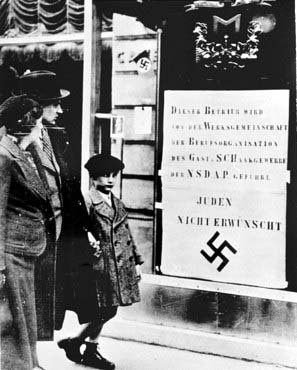
The French for decades after World War II liked to claim that their Resistance was of mythological proportions, fighting against both the Germans and the hated Vichy regime, which was little more than a puppet government. Yet, the Germans had relatively few administrators in France during the war, meaning that the government was autonomous and legitimate, and regarded as such by the vast majority of French citizens. This inconvenient fact means that all of the Jews that France willingly transported to the concentration camps of the East was not actually at the behest of Germany but rather a willing collaboration on the part of a legitimate, racist French government. What the French still are having difficulty coming to terms with is the way they treated their non-white colonial African soldiers - and this while they were fighting a regime that itself was extremely racist.

This myth of resistance and scant collaboration was prevalent all over Europe until very, very recently. Hundreds of thousands of Europeans willingly participated in the systematic murder of innocent civilians - Jews, gypsies, ethnic minorities - but for most of the post-war years were able to blame this on the Nazis. Most of the resistance movements were not nearly as large as they were made out to be after the war, as well. Having a significant part of your countrymen participate in genocide and mass murder doesn't feel or sound too good for most people, as it should not. But ignoring or misconstruing these facts does humanity and each individual country a disservice. More importantly, it is a continuing slap in the face of the millions of innocent people who were killed in the war.

One of the many tragic aspects of the Holocaust was how little anyone did to stop it. In the 1930s and 1940s, Americans consistently showed concern for the fate of the Jews in Europe, yet supermajorities of the population at the same time refused to allow them to emigrate to the United States. Britain certainly knew about what was happening in Eastern Europe, yet did very little to do much about it. Before and after the war, Poles engaged in pogroms that killed Jews - and this in a country that saw millions of its citizens, Jewish and non-Jewish, systematically murdered while being treated as sub-humans by Nazi occupiers.

The United States, generally speaking, likes to look back on the Second World War as one of its finest hours. America was a beacon of liberty, fighting a barbaric racist regime so that Europe and the world could be free. While this noble war was being waged, President Roosevelt rounded up hundreds of thousands of innocent Japanese-American citizens, took them from their homes, and imprisoned them in camps - all because of who they were, not for what they had done. In the midst of fighting a country that had legalized discrimination, segregation, and racism, the United States itself had an entrenched system of legalized discrimination, segregation, and racism. The army was segregated until 1948; there was a legal, Constitutionally-upheld system that separated blacks from white society. Many of the American soldiers who fought to free Europe came back to a society that purposefully excluded an entire group of people for arbitrary reasons and did nothing to change it - Civil Rights legislation would only come some 20 years later.

While these uncomfortable truths are talked about in classrooms throughout the United States, they are almost never put into the context which they should be: that one country that practiced discriminatory and racist policies against a minority group was fighting against another country that practice discriminatory and racist policies against a minority group. And while the United States agreed that what was happening to Europe's Jews was unacceptable, they did nothing to stop it for years, while also continuing to oppress millions of their own citizens.

The Nazis are an easy scapegoat because they did indeed usher in humanity's darkest hour - they showed what we as humans are capable of, and it was terrible. But the Nazis' crimes should not excuse the crimes of others. It is right and just that Germany accepts the entirety of the actions of the Nazis, just as countries like France, Austria, and the United States needs to accept the uncomfortable truths buried in their pasts.

Anti-Semitism and racism was not unique to Germany or Europe - far from it. Recognizing and accepting this is one large step in making sure that the darker side of humanity never again resurfaces. We must all stare history in the face and not blink.

Thursday, September 29, 2011

Excoriating National Socialism's Defilement of Germany

For too many people, when they think about Germany the first thing they think of are Nazis, the Holocaust, fascism, and World War II. This is understandable, considering the monumental destruction the National Socialist regime execrated on humanity that resulted in the deaths of tens of millions of people. But for many of these people, the modern, industrialized, economic heavyweight, European country of Germany is equated only with the fascist criminals who carried out crimes against humanity in the name of Germandom.

This equating all of Germany with the Nazis is ubiquitous; the notion of collective guilt is one that was prevalent in the Allied camp after the atrocities of the Hitlerite regime became fully known. Every German citizen who has lived and died since 1945 has born the weight of guilt on their shoulders and felt, constantly sitting in the back of their mind, the acknowledgement that it was their country, their soldiers, their fellow Germans who pursued such abominable paths that led to the destruction of countless lives and the almost-annihilation of Europe's Jewish population.
These atrocities - Your fault!

This is something vitally important for Germans growing up today to be aware of; though they may only be 15, or 20, or 30, and have had nothing at all to do with the crimes of the past, they are told in explicit detail and are never allowed to forget for one moment the horrific atrocities the racists who led their country committed. And they should be aware of these facts.

But the Germany of today, and the Germany that was around before the fascist dictatorship, is not the National Socialist Worker's Party. The fact that this stain upon the nation will never be gone is the enduring and terrible legacy of the darkest chapter in human history.

The Nazis have forever defiled Germany.

The National Socialist regime were composed of extremists, right-wing fanatics, racists, fascists, authoritarians, gangsters, criminals, and terrorists. These people ruled the country, waged war, oppressed entire civilizations, and committed the heinous act of genocide in the name of Germany. But they were not Germany.

A majority of German voters in 1933 voted for parties other than the NSDAP, which is often overlooked. They illegally and undemocratically seized power after they were unable to obtain the necessary parliamentary majority. A democratic country became a dictatorship that would ruin the essence of everything it touched.

The dictatorship outlawed other parties. Opposition delegates to the Reichstag were murdered shortly after the election. Non-members of the party were forced from their jobs, their homes, their country. Opponents to the regime were oppressed and murdered. The press was censored. There were no elections. The Gestapo turned the nation into a police state. A brutal war was waged against millions of people that resulted in countless innocent lives destroyed, and everywhere experienced death, misery, and destruction.

The Jews became the target of a racist, authoritarian, purposeful, cold-blooded, state-led campaign of terror, persecution, and extermination. Millions of people, from Germany, Poland, Russia, France, and elsewhere across the continent, were singled-out for annihilation.

Six million human beings were taken by other alleged human beings from their homes, their families, their countries. Six million human beings were forced to live in disgusting, disease-ridden, walled-in ghettos. Six million Jews were rounded up, stuffed into trains, and brought to isolated hell-holes so that they could be systematically degraded, debased, abused, oppressed, and exterminated. The very depths of evil were culled forth by the fascist dictatorship's leaders to bring about such a nefarious and unimaginable horror that was the Holocaust genocide.

Another six million human beings were likewise murdered for belonging to the wrong political party, having a non-fascist opinion, for being homosexual, homeless, mentally-retarded, disabled, or having the wrong skin color, name, or background.

This totalitarian regime was not made up of Germans, or humans. When Berlin was being ravaged and torn down, with millions dead already, the leadership of the NSDAP kept fighting. Though it meant that children and teenagers were sent to die in a battle they could not win, and that millions of civilians would be killed, the leaders of the dictatorship did not care. They did not care about the German people. They were ruthless, bloodthirsty, tyrannical gangsters, thugs, criminals, and despots. Their terrible legacy lives on, as it should, as a reminder of the evils of fascism and the depths to which humanity once sank.

But the stain of the Nazis should not smear the true Germany: the Germany of the millions who voted against the fascists; the millions of the German Resistance who fought against them and tried to stop their takeover, their crimes, their oppression; the too-few Christians who protected persecuted Jews.

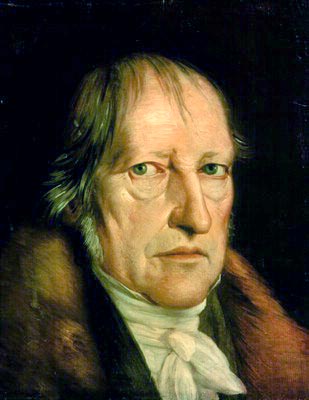
The true Germany is that of Goethe, Schiller, Herder, Hoffmann, and Hegel;

of Immanuel Kant, Heinrich von Kleist, Johann Gottlieb Fichte;

of Thomas Mann, Hermann Hesse, Bertolt Brecht, and Theodor Fontane;

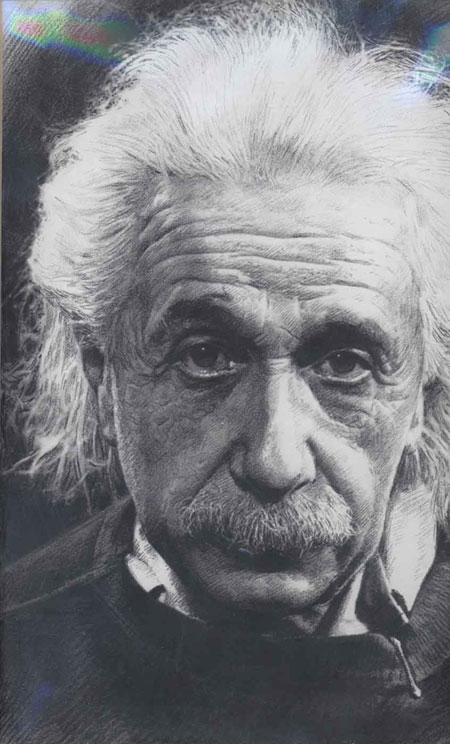
of Albert Einstein, Max Weber, Alexander von Humboldt, Max Planck;

of Manfred von Ardenne, Karl Benz, Christian Doppler, Daniel Gabriel Fahrenheit;

of Friedrich Nietzsche, Caspar David Friedrich, Arthur Schopenhauer;

of Franz Stuck, Otto Dix, and Max Beckmann.

This is the true Germany. The Germany of literature, art, philosophy, and science. The attempted genocide of Europe's Jews, and the denigration of the contributions that Germany's Jews had made to their country, irrevocably turned German-Jews away from their former homeland, as it should have. As Peter Gay, a historian who fled Germany when he was still young, has explained - he cannot consider himself German, or feel comfortable ever stepping foot in the country of his birth again due to the crimes committed by the fascists and the acceptance of these crimes by much of the population.

This is Germany's shame. This is the result of the Nazi dictatorship. The Nazis destroyed their own culture, ruined their own cities, and murdered their own citizens. National Socialism defiled Germany, its culture, its history, and its future. The crimes of the past should never be forgotten, or pushed aside. But they should not define the nation.

Wednesday, May 4, 2011

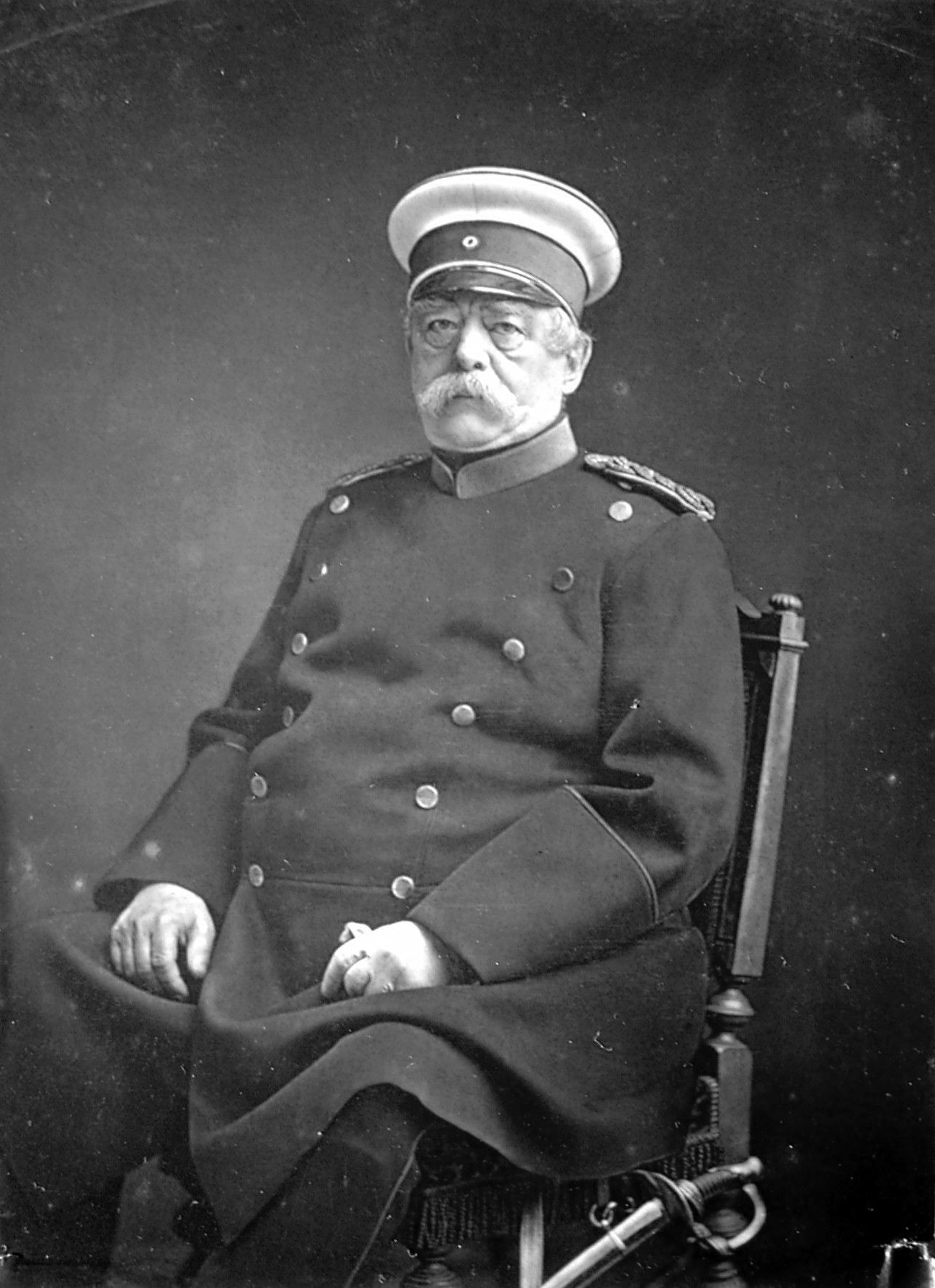
The Legacy of Germany's Iron Chancellor

Otto von Bismarck was a master statesman, helping to reshape the European landscape in the latter half of the 19th century. No other figure so decisively shaped either Germany or Europe for decades before or after the Iron Chancellor.

As both a statesman and a politician, Bismarck was unsurpassed in his ability to accomplish his overarching goals, no matter how long it took or what means were required to do so.

Ruthless, partisan, deceptive, yes. But his maneuverings as Prussian Prime Minister would eventually unite the disparate German lands into a mighty Empire capable of irreversibly transforming the European geo-political landscape. Bismarck was the only man capable and willing to create a new German Empire, while at the same time maintaining the balance of power on the continent and keeping domestic political unrest at bay.

When Otto von Bismarck was growing up, Germany was an idea, not a nation. German-speakers were spread throughout Central and Eastern Europe, numbering in the millions but lacking a unified, coherent national awareness. Bismarck was born to Prussian nobility in 1815, at a time when the French Empire had just finished wreaking havoc and devastation across Europe and almost ceasing Prussia to exist in the process.

The Revolutions of 1848 showed that there was a strong nationalist current running amongst the ethnic Germans of Europe - but the only way the idea of a German nation could become reality would be through the leadership of either Prussia or Austria, the two great German-speaking powers. Bismarck understood that, in order for the German people to unite and maintain stability, the predominance of Prussia would have to be assured. Austria could never hope to maintain strength of unity amongst the different German lands when their own state consisted of dozens of ethnicities and nationalities, all vying for separate interests. Prussia had the industrial strength, the prestige, the military, and the desire to use all of the aforementioned to achieve such a feat.

This was no easy thing to do; the German lands had never been more than loosely connected, and the states that had joined together in alliances had only been certain regional areas - the North German Confederation or the Hanseatic League, for example. Different Germans who lived in different areas had completely different dialects, weights, measures, and most importantly, religions. Southern Germany and Austria were Catholic and more rural while the northern parts were more urban and Protestant.

After the devastation and subjugation that had been accorded to German lands by the French tyrant Napoleon, hatred of France became an entrenched part of the German psyche. This was felt by most German-speakers, but especially so for Prussia, whose honor had been severely damaged by the embarrassments handed to them after military defeats to the French, of all people. By the early 1860s, Bismarck had become Prussia's Prime Minister and realized that the new French Emperor Napoleon III thought quite a bit more highly of himself and his skills than was warranted.


Bismarck's brilliance lay in his ability to complete overarching goals to perfection; in this case, Bismarck's desire to enhance Prussia's power at the expense of France's had the added bonuses of uniting the rest of the German lands under Prussian dominance, subjecting Austria to second fiddle, isolating and humiliating France while also creating a new Great Power in the German Empire.

The first step was to make sure Austria could not become the leader of a new Germany. This was ensured by two wars, the first against Denmark and the second against Austria herself. Denmark's southernmost two provinces of Schleswig and Holstein had been disputed for a long time, and after the Danish King died, a war broke out between Austria and Prussia on the one side and Denmark on the other. Bismarck's diplomacy was crucial to this war, as he ensured that Britain and France remained isolated, unable to commit troops to Denmark's assistance, while also handing the spoil of Holstein to Austria, thereby sandwiching the territory between two Prussian-controlled areas in a part of Europe that was far outside of Austria's sphere of influence.

The corresponding war against Austria was over quickly, thereby assuring Prussian hegemony among the Germans. The corresponding treaty again highlights Bismarck's aptitude; all of the non-aligned German regions, notably the Kingdom of Bavaria, agreed to join a united Germany under Prussian leadership should the German Confederation be aggressively attacked by France.

In another stroke of brilliance, the Iron Chancellor managed to alter an outgoing telegram to Emperor Napoleon III, triggering an idiotic overreaction by the French that led to a humiliating defeat at the hands of the Prussian military. Not only did the war last barely a few weeks, but the Emperor himself was captured, as well as Paris. To add even more insult to injury, the new German Empire was proclaimed in the Palace of Versailles, the embodiment of French royalty.

For almost 20 years after that, as the new Chancellor of the German Empire, Otto von Bismarck oversaw the emergence of a new Great Power that should have massively disrupted the delicate balance of power in Europe, but did not. This was due in no small part to Bismarck's own gravitas.

Through a series of diplomatic treaties, Bismarck managed to secure Austria-Hungary and Italy as allies, while also keeping Russia and Great Britain neutral. Such maneuvers had the desired effect of effectively isolating France; the danger of inciting a general European war was significantly reduced, and if one were to come to pass, it would have been France surrounded on both fronts rather than Germany. These policies were almost unilaterally reversed after the new Kaiser Wilhelm II dismissed Bismarck in 1890, a terribly stupid decision that quickly made Germany an enemy of Britain, France, and Russia while also unnecessarily provoking an arms race with a naval buildup and expansion into Africa.

Chancellor Bismarck was also an astute politician on the domestic front. When the Social Democratic Party threatened to overtake his preferred conservative majority in the Reichstag, Bismarck incredibly stole their platform from under them: saying that unemployed or sick workers were bad for the economy, Bismarck helped implement the beginnings of the modern German welfare system, with unemployment insurance, health care, and social security. Though he was vehemently anti-socialist, Bismarck simply re-worded the SPD's legislation into a conservative framework that engendered political victories while also helping the economy.

Though Bismarck was far from perfect - he hated Catholics, Socialists, and the Polish, attempting to enact several discriminatory laws; he restricted Germany to an anti-democratic aristocratic monarchy, with too much power vested in the Kaiser and the Junkers - his policies and achievements for Germany were phenomenal.

Without Bismarck, it is unclear exactly if Germany ever would have united, and if they did, what form it would have taken. Though his use of military means to accomplish the unification is probably not what an idealist would have liked, it worked. Only a master diplomat was able to rework the European geo-political landscape to benefit Germany to such an extent, while also isolating the other Great Powers of the day and maintain domestic stability and prosperity.

Germany truly could have used a man of his caliber, and rued the Iron Chancellor's death in 1898.

Monday, March 28, 2011

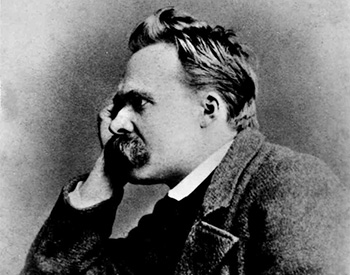
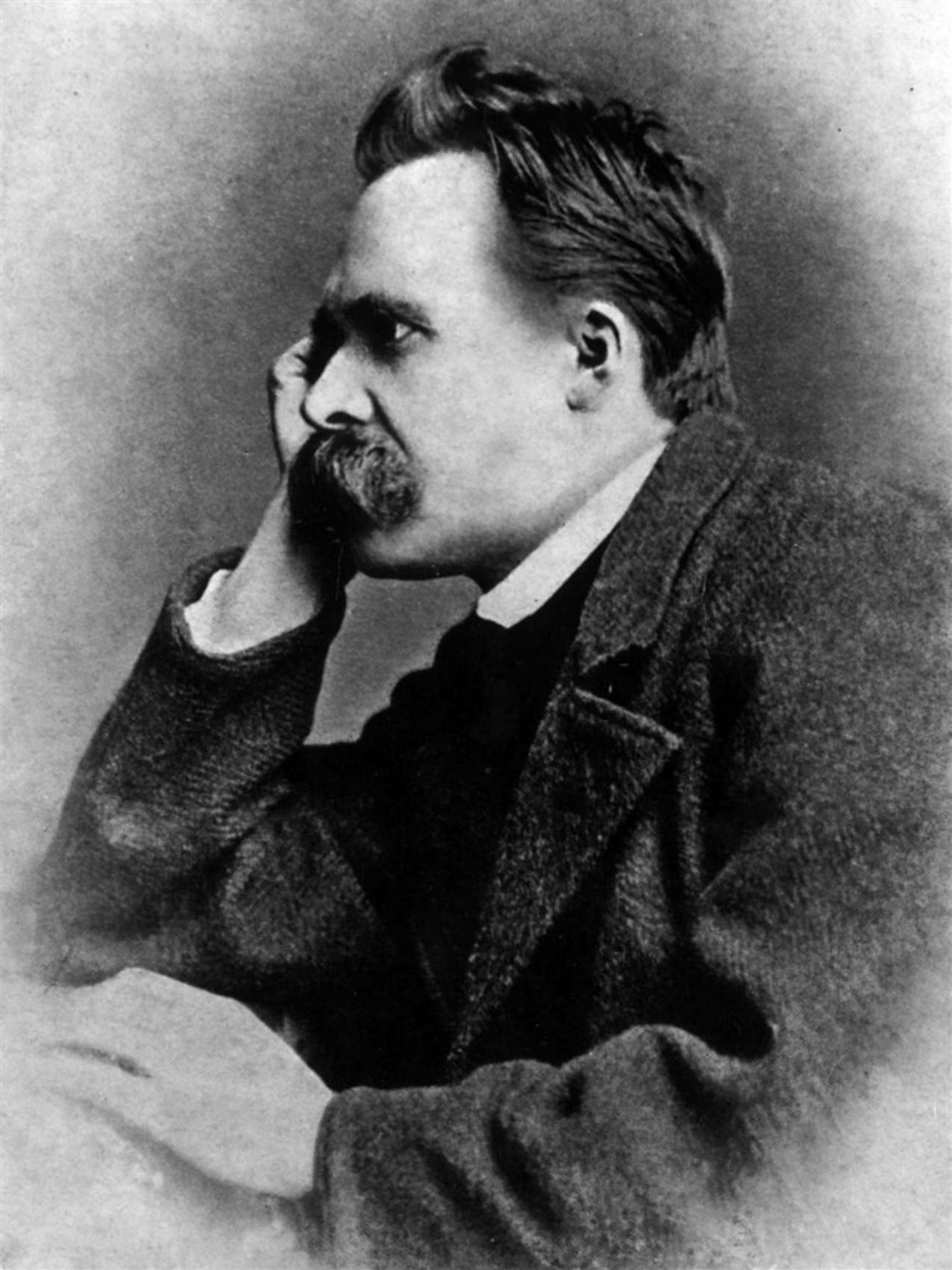
In Praise of Friedrich Nietzsche

Friedrich Wilhelm Nietzsche died over one hundred years ago, yet he remains one of the most well-known philosophers in the world. Despite being a household name, not many people are familiar with his works. For those who have read his books, his views often elicit strong, fervent emotions among people - both positive and negative, love and hate. Some parts of his philosophy are controversial, but like much of the discipline, his views can be interpreted in many different ways leading to many different conclusions.

For example, the Nazis took Nietzsche's concept of the will to power and the Übermensch, or superman, and used it as a way of justifying anti-semitism and their belief in Aryan superiority. In reality, Nietzsche in his own time had been exceptionally against pan-Germanism, nationalism, and anti-semitism, going so far as to break off a friendship with Richard Wagner over the latter's nationalist and anti-semitic views.

This is just one example of the ways in which a certain interpretation can lead to a radical conclusion, but it's also obviously not the only valid interpretation or meaning of what Nietzsche meant with his Übermensch. Indeed, much of what Nietzsche wrote can be seen in a better light, in a way that can be used in a positive manner.

Take, for example, Nietzsche's views on human nature. To him, there were two differing aspects of human nature: the Apollonian and the Dionysian. The Apollonian aspect is a person's rational side - a natural yearning for order, tranquility, peace, harmony, etc. By contrast, the Dionysian side of human nature is irrational - our passions, dynamism, chaos, unpredictability, etc. Nietzsche believed that the best life is one lived with a fusion of these two aspects; a life of controlled passion. In other words, one should live their life with passion: take chances, do what you normally wouldn't, constantly strive to achieve something more, don't settle, don't become stagnant.

Nietzsche's declared that "God is dead" and we had killed him - we, meaning the philosophers and scientists of his time. By relying on God for so long as the ultimate example of morality and meaning, we had killed him and now had nowhere to look for meaning or moral ideas. The same could be said for the scientists who had shown that the earth was not a special place, and humans were not unique. Nietzsche believed that there was no God who was there to protect us, and that without Him, religion, science, and metaphysics had abandoned their traditional roles as moral guidelines, leaving humans alone to fend for themselves. Nietzsche was criticizing the reliance on one source for all of life's convictions and meanings; unchallenged convictions were, according to him, what had caused unthinkable tragedy and bloodshed throughout history (religious or otherwise).

This belief led to Nietzsche's concept of the "will to power", what he believed to be the most basic human motive, trumping even Schopenauer's "will to live". The will to power is somewhat controversial, again with several different potential interpretations. But one way it can be understood is that it is a way of self-examination to delineate active from reactive forces within oneself; that is to say, instincts should not be repressed, even ones that may be negative (such as aggression), and that by doing so, humans should attempt to become something more than they were. In this manner, "power" can be understood not necessarily as an aggressive trait, but rather a means through which one can grow and expand one's own abilities/tendencies to gain mastery of oneself and achieve individual growth.

This ties into Nietzsche's concept of the Übermensch (translated as superman or overman), or the state of being whereupon one has strove so far and long so as to achieve their full potential. Nietzsche felt that ordinary, mundane experiences in a human's life had been partly a result of an over-reliance on religion and science, and in order to discover new moral foundations, one had to embrace one's will to power and overcome their former self to become a superman. Nietzsche emphasized a critical awareness of one's surroundings and beliefs - never be content, constantly seek to become more passionate, more wise, more erudite.

This belief in individualism and the ideas of the will to power and the Übermensch can be seen in Nietzsche's saying "what does not kill me, makes me stronger." Each breath a person who survived a horrific tragedy takes - a soldier in the trenches of World War I, or a Holocaust survivor, for example - is more cherished and beautiful than any taken before then. A man who loses a leg from gangrene while attempting to climb a tall mountain should embrace this and become a stronger, more capable climber and strive to achieve even more goals, not wallow in gloom and doom. The meaning of one's own life comes from within oneself - we must seek it out ourselves, and not rely upon others to do it for us. A life in pursuit of becoming more than what you once were is a life of creativity, passion, perseverance.

In a way, this type of self-growth can quite easily be related to Carl Maslow's humanistic theory of self-actualization, at which point a person experiences harmony and elation with the aspects of one's life, called "peak experiences". For Nietzsche, every person should strive to achieve their full potential and then live their life in accordance with that moralistic underpinning; we should constantly strive to become a better artist, a better writer, a better father, a better sports-player, a better guitar-player, a better fireman, policeman, etc.

Though these are only small parts of Nietzsche's monumental amount of philosophical work, it is at least evident that there are certain aspects of his views that can be interepreted and applied in a manner designed to benefit the individual. Despite claims of social darwinism or racial superiority, Nietzsche is like what many other philosophers are, whose meanings can be derived by the interpretation you wish to take from them, and much good can be taken from Friedrich Nietzsche.

Monday, January 31, 2011

Whither the Left?

The Financial Crisis Inquiry Commission of the United States has just released its final report on the causes of the economic catastrophe that has so impacted the world. The report concludes that the monumental economic collapse was largely avoidable and occurred mostly because of "human action and inaction"; that is to say, in so many words, insufficient regulatory practices at all levels of government and the private sector combined with an excessive drive to accumulate more wealth by financial institutions, ultimately leading to the worst economic crisis in 80 years.
At the same time that the institutions were causing this financial meltdown, which economically crippled millions of people who had contributed nothing to the crisis, they were rewarded with massive tax-payer-funded bailouts by the government and lavished themselves with massive bonuses.

While this type of financial bust is inherently systemic in a capitalist economy, the magnitude of this crisis should have, in particular, irrevocably damaged right-wing, neoliberal economic practices that preached deregulation of financial sectors and, more broadly, strengthened parties on the Left that are more anti-free market or less pro-capitalism. Yet, despite this demonstration of the deficiencies in neoliberalism or capitalism, the Right appears to have emerged stronger, while the Left is in disarray.

In Europe, only a few countries are currently governed by left-wing parties (Norway, Spain, Portugal among them), while the majority of the rest, including the large economies of Germany, Britain, France, and Italy are run by conservatives and/or neoliberals. Support for social democratic parties like Britain's Labour or Germany's SPD are the lowest they've been in decades.

In the U.S., the Tea Party advocated for even less government regulation and the right-wing Republican Party just won control of the House of Representatives. A Conservative minority government in Canada has remained in power for the past 5 years, despite the opposition's best efforts at unseating them. Chile elected its first conservative president in years.

Certainly, some of the Right's success in Europe can be attributed to a rise in anti-immigrant sentiment, but this doesn't explain wholly why they control a majority of ruling governments on the continent.

Whither the Left? Why has the left wing been unable to conquer the right at a time when they should have already easily done so?

Some think that it's because they have nothing new to offer. If that were true, though, then why did the Republican Party gain so many seats after having essentially the same platform that Americans overwhelmingly rejected in 2006 and 2008?

Perhaps it's because the message isn't getting out about what the Left stands for. This is a possibility. The center/center-left Liberal Party of Canada has been having somewhat of an identity crisis for the past several years, with voters unsure of what the party stands for; their traditional support has steadily eroded. But, if one looks at the fracturing of the Left in European countries, voters are clearly given a variety of options of left-wing choices and it's still not been enough, even for traditionally strong leftist countries like Sweden or Denmark.

One of the major problems facing the Left is this fracturing. The German Left is composed of the Greens, SPD, and Die Linke. The SPD has ruled out the possibility of any future coalition governments with Die Linke, who should be a natural ally. So has the Liberal Party of Canada thus far appeared offended at even the mention of joining with the social democratic NDP. The Obama administration's disdain for the "Professional Left" has been well-documented. If everyone on the Left apparently hates each other, then they cannot unite and therefore allow the Right to take control. The French Right is united behind the UMP, after several conservative and center-right parties merged together several years ago.

For so-called "Big Tent" parties who were recently unseated by their conservative counterparts, like Labour in Britain or the SPD in Germany, the fracturing of the Left attributed to their decline in popularity, as traditional core supporters disliked Tony Blair's Third Way and support of the U.S.-led invasion of Iraq, while German voters questioned just how socialist the SPD were after they introduced more right-wing policies, like raising the retirement age and changing the way social welfare payments were distributed. The SPD reached a new low in the 2009 Federal election, while the other parties on the German Left achieved historically high percentages.

American liberals became disillusioned with the Democrats when they perceived certain right-wing policies of the Obama administration, and they stayed home during the 2010 midterms. It can be inferred, therefore, that supporters of center-left or Left wing parties expect these parties to behave in a certain ideological fashion, an expectation that can be sometimes harsh on parties that have to develop policies in a more pragmatic fashion due to the circumstances of the situation.

The mutual dislike the Left feels for itself has only done more to damage to its common cause; austerity is the new nationalization in Europe as a result of conservative governments who proclaim to want to rein in spending and reduce deficits, but possibly have a thinly-veiled desire to tear up the social safety net. Pillars of Left-wing political monuments, like Britain's NHS or America's Social Security program are inching closer to the chop-block. For those who believe in a large government presence and social programs designed to smooth the rough edges of capitalism, they face a severe threat to their cherished ideals.

With in-fighting, blame, and accusations the order of the day for the Left, however, the defense of these pillars has become weaker at a time when they should be assured. For a resurgence of the Left, common cause and consensus will have to be found. As well, the impatience of many who want change and progress will have to be overcome, as the journey in the future will be a long, bumpy ride.

Tuesday, January 11, 2011

The Question of Autonomy

What's the difference between Quebec and the Sudetenland? Aside from the obvious different eras of time in which they exist, the two regions have both much in common and quite a bit that's different. The major theme binding the two together though, is the question of autonomy and how a state can deal with its disparate regions in a practical manner. The idea of self-determination, self-autonomy, sovereignty, whatever you want to call it, has led to bloodshed in the past, and continues to disrupt life as we know it in places all over the world, from Russia to Kosovo, from Turkey to Sri Lanka.

The first thing to consider with autonomy is the historical context. Quebec's is pretty straightforward: Originally colonized by the French, the sparsely-populated northeastern part of North America was a French-speaking outpost mainly used to sell furs for the European market. As France's other colonies in the Caribbean were much more valuable, they basically gave Quebec over to the British in relief after the latter won the Seven Years' War (French and Indian War).

Quebec's geographic position in Canada

Thus, the mainly Catholic and French-speaking former colony of France became a part of the British Empire, where Anglicanism and the English language were dominant. It wasn't as bad as it sounds, though, considering that the English actually gave Quebec quite a bit of leniency in regards to their civil laws, courts, language, and religion. Sure, they were still not allowed to independently rule themselves, something which helped cause the rebellions of 1837 and 1838, but these were put down relatively easily by the ruling British. As the decades passed and British North American turned into the Dominion of Canada, things were relatively quiet on the cultural radar of Quebec.

The 1960s is when things really heated up, during the so-called "Quiet Revolution". In only two decades, Quebec transitioned into a secular and industrialized province with a rather large portion of the population advocating separation from Canada, or at the least, significantly more autonomy. The sovereigntists helped elect the new Parti Québécois to power in the province, the first time a provincial government actively advocated secession from Canada. Two referendums on the subject of whether or not Quebec should be independent (or semi-independent), one in 1980 and one in 1995, both rejected outright independence, albeit by merely a whisker in 1995.

The Sudetenland's tale is quite different than Quebec's. Most people learn about the Sudetenland when studying the origins of World War II, in which the mainly German-speaking part of Czechoslovakia was willingly handed over to Hitler by the Allies in exchange for peace in 1938. The story behind the Munich Conference is, however, much more complex than this simple rendition shows.

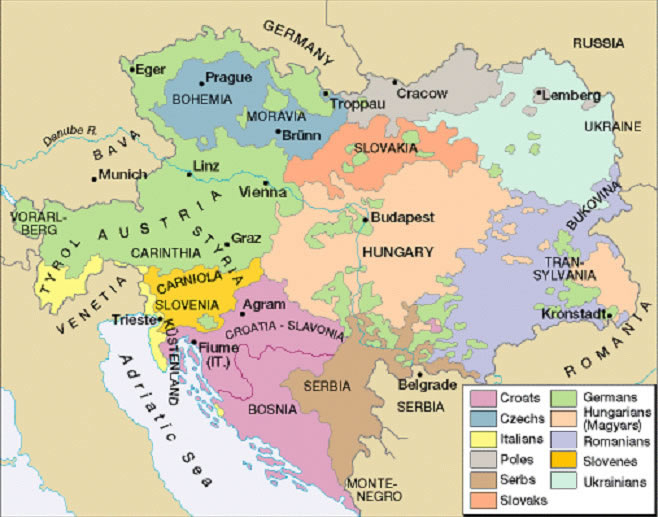
The term Sudetenland didn't even come into usage until the 1930s, and was only then used as a way of differentiating German-speaking Bohemians from Czech-speaking ones. The history of Germans and Czechs in Bohemia goes back centuries, as ethnic Germans began settling on Bohemian crown lands around 1100. The two groups generally lived in harmony over time, though they did indeed have separate existences, divided into their own ethno-cultural groups. But Bohemia was included in first the Holy Roman Empire of the German Nation, then the Habsburg Monarchy, in which the German language and culture was accorded the highest status. To be non-German or speak a Slavic tongue meant to be backwards, a peasant, uncultured. Until the 19th century, Germans considered Bohemia and Prague as German as Bavaria and Munich.


Problems only really began to arise when nationalism was awakened in the Slavic peoples of East and Central Europe, who resented the condescension and privileges awarded to the smaller German group. As the Empire became more liberal and allowed greater freedoms to its constituents, the balance of power among Germans and Czechs began to drastically change from a German position of power to that of the Czechs.

Beginning in the 1850s and carrying through to the start of World War I, Czechs slowly began to award themselves more privileges and powers previously given only to Germans, causing both Czech and German nationalism to rise in competition. With the influx of nationalism, what would otherwise have been normal democratizations of daily life became battles in a struggle of "nations"; the reduction of German-language schools was seen as catastrophic, the question of an official language provoked heated debate, and tempers on both sides came to a breaking point.

World War I postponed a possible violent destruction of the Habsburg Monarchy, but the war's aftermath wasn't very acceptable to German-speakers either. Despite plebiscites held that declared German-Bohemian desire to join the new Austrian or German Republics, the Allies unilaterally declared the eastern rim of Czechoslovakia that was called the Sudetenland to remain under Czech control. The central government in Prague then ruled over some three and a half million Germans who did not desire to be a minority in a Slavic state.
The questions with which to be concerned are now: Is/were the minority justified in wanting more autonomy? In what way did/do the majority deal with the question of autonomy in regards to their minority? How were the situations of the Sudeten Germans and Francophone Canadians similar or different?

For both cases, both French-speaking Quebeckers and German-speaking Bohemians were justified in wanting some form of autonomy, but a better question would be as to how much autonomy they should be granted. Similar complaints from both groups were that they were underrepresented in the civil service, their language was not regarded in the same way as the majority's, and they both felt at least slightly oppressed. The major difference that enabled Quebec to peacefully remain part of Canada and allowed the fascist dictatorship in Germany to annex the Sudetenland was in how the federal government responded to calls for autonomy.

In Canada, French became an official language, the national flag got rid of any British sentiment, the national anthem is sung in both languages, and some accommodations were made to promote bilingualism, equality, and justice for both Anglophones and Francophones. Being a Canadian province means that Quebec is somewhat independent, having their own government and premier. As well, despite the rise of sovereigntist parties in Quebec, there was always still the option of voting for federal parties that were open to every province and every person, regardless of language or ethnicity. With the Meech Lake Accord and the Charlottetown Accord, Francophones could at least perceive that the government was making an effort to achieve some kind of balance, even if this attempt was ultimately dissatisfying and unsuccessful.

Notwithstanding the rather stark contrasts in the geo-political situations facing Canada and Central Europe in the 1930s, the central government in Prague made some major mistakes in attempting to deal with the issue of autonomy. In Czechoslovakia, the Germans were not the only ones who desired some form of autonomy; there were many Slovakians who also wanted to be free of what they saw as Czech dominance, as well as thousands of Poles, Ruthenians, and Hungarians. The problem with the First Czechoslovak Republic was that its leaders saw it as a nation-state, when in actuality it was 50% non-Czech. The national flag reflected on Czech and Slovak cultures; passports were in "Czechoslovak" and French only; coins, stamps, and other minutiae of daily life were only in Czech or presented Czech nationalist images; even political parties were divided along ethnic lines, meaning that a German in Bohemia could not vote for any party but the ethnically German ones. There was no "Bohemian Party" that was open to every ethnicity. There were no provincial parliaments in Czechoslovakia, meaning that the fervent German desire to at least partly govern themselves went unfulfilled. In Czechoslovakia's case, the German's perception was that they were unfairly persecuted and ignored because of their Germanness; this perception led to an opportunity for the National Socialist regime to exploit the situation, which they did with great aplomb.

Though calls for sovereignty or independence for Quebec have recently quieted down, the continuing strong showings of the Bloc Québécois and Parti Québécois demonstrate it still is an issue. When compared with the situation of the Sudeten Germans and Czechoslovakia - an experience that saw fascism, murder, and expulsion -, French-Canadians can count themselves lucky and fortunate to live in the tolerant, responsible, and open-minded country that they do.

Sunday, July 25, 2010

World Cup 2010 Review: Germany

Current Rank: 4
Expectations going in: Low
Finished: 3rd place

Germany went into the 2010 World Cup with a mixture of youth and veterans, inexperience and experience. Most pundits predicted the German team would struggle to perform up to their usual high standards, especially when talismanic captain Michael Ballack was injured before the beginning and ruled out of the tournament.

With expectations so low, the Mannschaft had nowhere to go but up. In their opening game against Australia, Germany scored early and dominated the match, absolutely destroying the Socceroos 4-0 thanks to goals from Mueller, Podolski, Klose, and Cacau. Almost immediately, the press labeled them once again as contenders for the title, after having finished in 2nd in 2002 and 3rd in 2006.
Cacau punctuated Germany's dominance with the fourth goal against Australia

However, the Germans' group was no easy task, the lopsided score against Australia not withstanding. Germany next played a strong Serbian side, looking to stave off elimination after having lost their first game against Ghana.

The Germans started out strong, but Miroslav Klose accumulated (harshly) 2 yellow cards early on in the match, and the resultant advantage for Serbia resulted in a goal shortly thereafter. However, despite being down to 10 men and losing 1-0, Germany went on to dominate the rest of the match. A penalty midway through the second would have tied the game, but Lukas Podolski saw his shot saved, and the Serbians held on for the win, thereby also giving Germany its first group-stage loss at a World Cup since 1986.

The stage was set, then, for Germany to take its World Cup destiny in its own hands for the last group match against the hitherto undefeated Ghana. Being unable to rely on the predatory instincts in front of goal of Miroslav Klose, the Germans were relegated to attempting to pass their way into the goal and taking long-distance shots - both of which, for much of the match, were unsuccessful. However, a brilliant act of creativity by Mesut Oezil saw the youngster's rocket from the top of the box fly into the corner, thereby giving Germany the win they needed to advance out of the group stage.
Mesut Oezil celebrates his goal with teammates

Awaiting them in the knockout rounds was traditional rival England. A rematch of the 1966 World Cup final had many neutral observer and rabid fans's mouths alike salivating. England had been disappointing up to that point in the tournament, and for the first 30 minutes of the match, it continued in much the same vein, with Germany taking a quick 2-0 lead through Klose and Podolski (who else?).

However, the looming threat of elimination seemed to galvanize England, and they pulled a goal back quickly before culminating in what they thought was the equalizer from Frank Lampard on the stroke of halftime. However, despite the ball crashing in off the crossbar and clearly going over the line, the referee did not award a goal and the score at halftime was 2-1 for Germany.

The possibilities of what would have happened after that goal had been allowed could be discussed endlessly, but the reality of the 2-1 score meant England had to attack to have any chance of coming back into the game. However, Germany was expecting this and transitioned effortlessly into a brutal and punishing counterattacking style that rewarded them with another 2 goals, to finish the game 4-1. Cue wild celebrations across Germany and despondence and despair in England.
If England had been feared to give Germany a run for their money, their next opponent were even more so: Argentina. Argentina had been running through their opponents, easily winning their group and looking classy while doing so. Two favorites entered this quarterfinal match in what was thought to be a very entertaining and attacking match.

An early mistake by the Argentinian goalkeepr allowed Thomas Mueller to score early on for Germany, and from that point on, Germany was content to simply soak up Argentina's relentless attacks and respond quickly on the counterattack. As Argentina became more frustrated by their lack of results in front of goal, their play became sloppier and this allowed Germany's forwards to slip by them. Once the second goal went in, Argentina's players seemed to deflate, and the next two seemed to just be for fun for Germany. A 4-0 final scoreline emphasized Germany's attacking and defending strength. Germany was simply dominating every team they met, with scores of 4-0, 4-0, and 4-1 padding their goal differential.

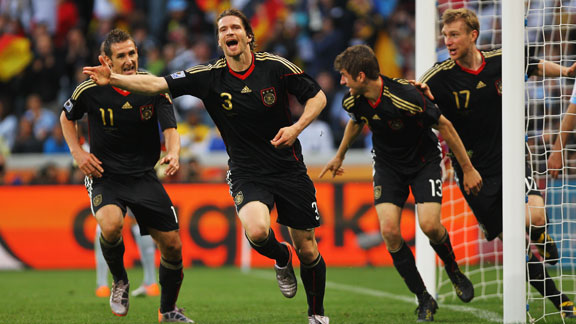
Defender Arne Friedrich's goal was the icing on the cake against Argentina

After tearing through their opponents in the group stage and the knockout rounds, Germany finally met a team that had had their number in previous meetings: Spain. The reigning European Champions had faced a defensive-minded team in every game they played, which allowed them to simply play to their strengths in outrunning and outpassing their opponents. It was hoped that Germany's attacking talents would be able to counterbalance the Spanish domination in passing and a remarkable game would emerge.

However, Germany would have to do without a vital player in forward Thomas Mueller, who had received an accumulation of yellow cards that forced him to sit out. Against Spain, this missing link was crucial, as Mueller was often the driving force behind the strong German counterattacks that created so many chances and ended in so many goals.

Germany tried to stifle the Spanish passing through the middle and attempted to create swift counterattacks, but these mostly proved ineffective and eventually the Spanish goal came late in the second half off of a corner kick, and once again Germany lost to Spain 1-0 in a major tournament's knockout rounds.

Though Germany were naturally disappointed, they could still hold their heads up high. The Germans reached their third semifinal in a row at the World Cup, following their performances at the 2002 and 2006 World Cups. A 3-2 win in the third-place match against Uruguay helped restore some of the lingering negative effects of the semifinal loss to Spain.

How did Germany achieve such a fantastic result with players who have so limited experience? Many of the younger players had been on the German youth teams that won every tournament they entered in. That's right. The UEFA U-17, U-19, and U-21 champions were all Germany in the years leading up to the 2010 World Cup. No other nation has achieved that feat before. Watching the 4-0 win over England in the U-21 final, many of the players on that squad also made the full squad in 2010.


Germany's youth program is clearly one of the best in Europe and the world. Following disappointing results in the 90's and early 2000's, the Deutscher Fussball Bund made changes to its youth policies, and since then, every Bundesliga side has invested heavily into their youth program, which has resulted in a vast quantity of talented players coming through the ranks that look as though they are more than able to fill the shoes of aging players.

Though they came up just short in 2010, the German team looks like it will be a major contender for several more tournaments to come. The more experience and playing time their youth players get at the international level, the more the team will acquire cohesion, and this can only mean bad things for the rest of European football. The future is definitely bright for German football.